Did you know that a mid-range kitchen renovation generates an average of 1,500 to 3,000 pounds of construction debris? Cabinets, countertops, flooring, drywall, and old appliances add up fast — and without a solid waste management plan, that debris becomes one of the biggest headaches of the entire project. This is exactly why having a reliable dumpster rental kitchen renovation guide before you swing the first sledgehammer is not optional — it is essential.
In this complete dumpster rental kitchen renovation guide, you will learn how to choose the right dumpster size, when to schedule delivery, which materials you can and cannot throw in, how to handle permits, and how to avoid the common mistakes that cost homeowners extra time and money. Whether you are doing a full gut renovation or a targeted remodel, everything you need to make smart decisions is right here.
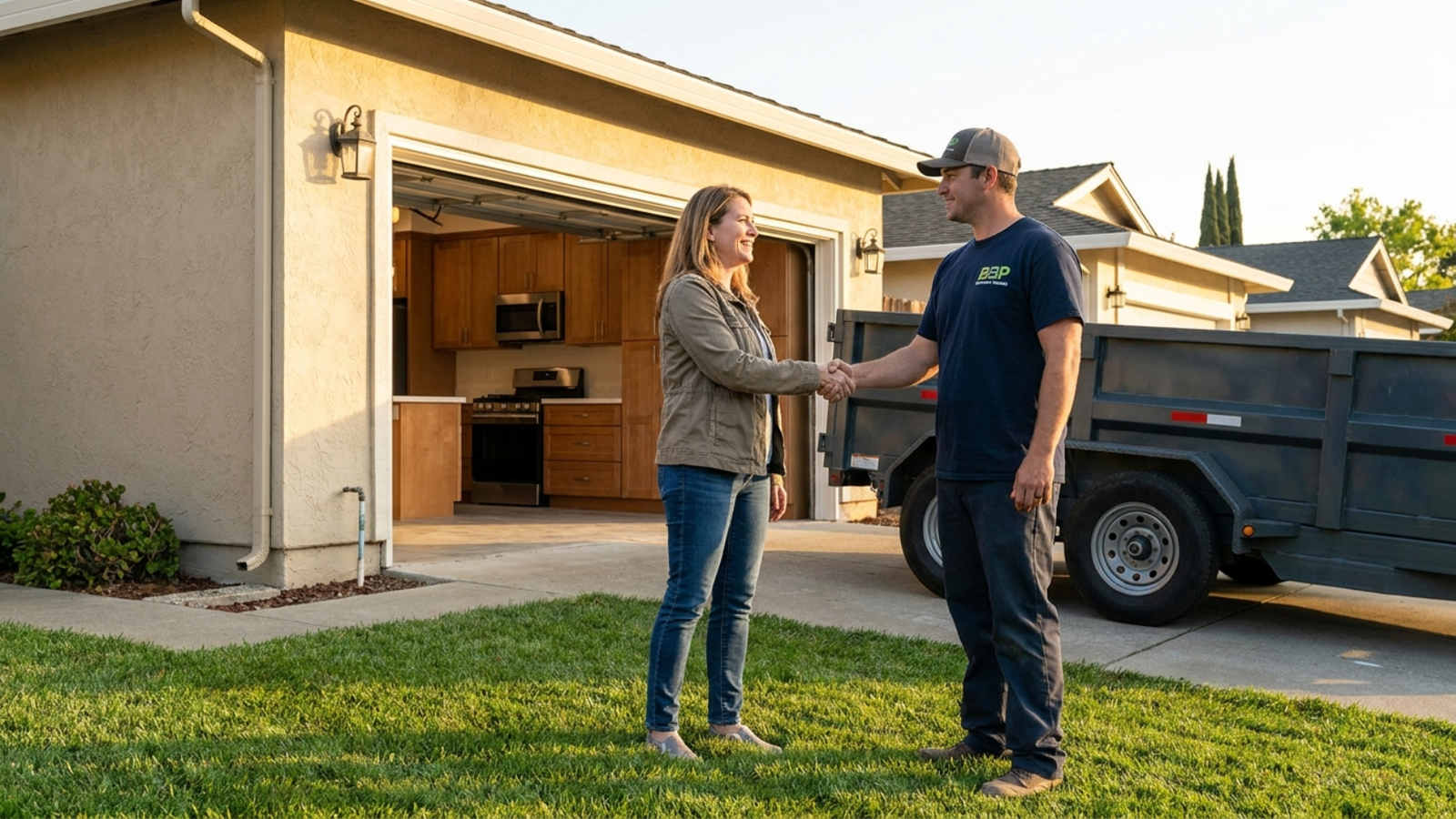
BBP Dumpster, based in Concord, CA, has helped hundreds of Bay Area homeowners navigate exactly this process — and the insights in this guide come from real project experience.
Keep reading to discover every step of the process, from planning through final pickup.

What Is a Dumpster Rental Kitchen Renovation Guide — and Why Does Every Remodel Need One?
A dumpster rental kitchen renovation guide is a structured plan that helps homeowners and contractors manage construction waste during a kitchen remodel. It covers container sizing, rental duration, prohibited materials, local regulations, and scheduling logistics — all the decisions that determine whether debris removal goes smoothly or turns into a project delay.
Kitchen renovations rank among the most debris-intensive home improvement projects. Unlike a simple paint job or flooring swap, a kitchen remodel typically involves removing and disposing of cabinets, old countertops (often granite or laminate slabs), tile, drywall sections, plumbing fixtures, range hoods, and sometimes structural framing. Without a clear waste disposal plan built into the project timeline, debris piles up, creates safety hazards, and slows every other trade working in the space.
Following this guide from the start keeps the job site clean, compliant, and efficient.
Why Kitchen Renovations Produce More Waste Than You Expect
Most homeowners underestimate how much material a kitchen holds. A standard 10-by-12-foot kitchen can generate debris that fills a 10-yard dumpster on its own when you factor in:
- Full cabinet sets (upper and lower)
- Countertop slabs
- Flooring underlayment and tile
- Drywall patches or full wall removal
- Old plumbing and electrical fixtures
- Appliances not being donated or resold
Planning your waste removal volume before the project starts — not in the middle of it — is the first principle of any effective dumpster rental kitchen renovation guide.
Step 1: Assess the Scope of Your Kitchen Renovation
Before you can choose a dumpster, you need to define the scope of your remodel. There are three general tiers of kitchen renovation, and each generates a different volume and type of waste.
Cosmetic Refresh
This includes painting cabinets, replacing hardware, swapping out a faucet, and installing a new backsplash. Debris is minimal — typically just packaging materials, a few tiles, and old fixtures. A small 10-yard container is usually sufficient.
Mid-Range Remodel
This tier involves replacing cabinets, countertops, and appliances while keeping the basic layout intact. You will also likely replace flooring and update lighting. Expect to fill a 15- to 20-yard dumpster.
Full Gut Renovation
This means taking the kitchen down to the studs: removing all cabinets, counters, flooring, drywall, and sometimes walls entirely. A 20- to 30-yard dumpster is standard for full gut projects in homes with kitchens larger than 150 square feet.
Accurately scoping your project is the foundation of following a useful dumpster rental kitchen renovation guide. When you underestimate scope, you end up with an overfilled container, overage fees, or a second rental that disrupts your timeline.
Step 2: Choose the Right Dumpster Size
Choosing the correct container size is the most critical decision in the entire dumpster rental kitchen renovation guide. Renting too small means overages; renting too large wastes money.
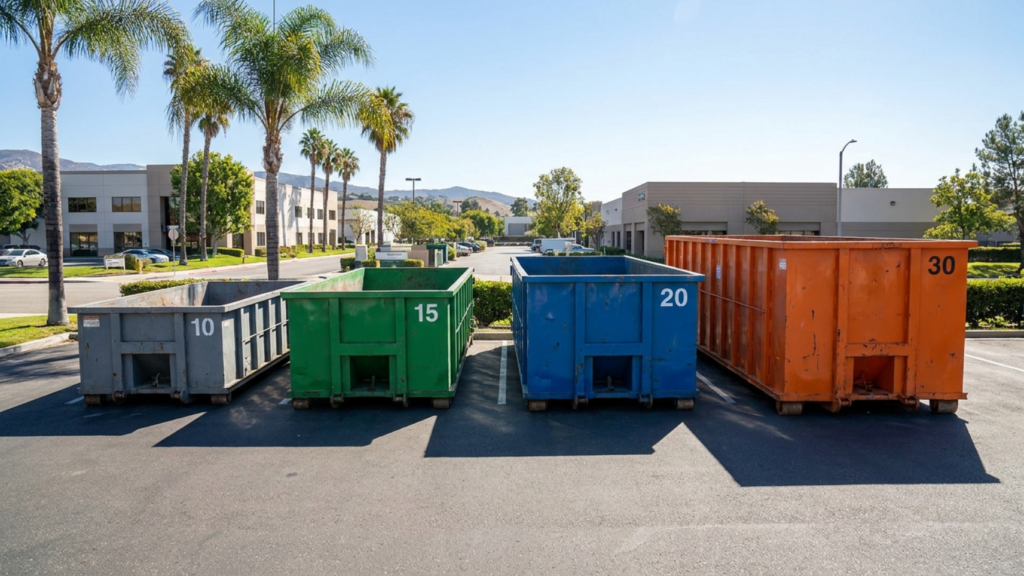
Here is a straightforward sizing breakdown for kitchen renovations:
10-Yard Dumpster — Best for minor kitchen updates, countertop-only replacements, and appliance removal. Holds roughly 3 pickup truck loads of debris.
15-Yard Dumpster — Best for cabinet replacements with flooring updates or partial wall removal. A reliable middle-ground option.
20-Yard Dumpster — Best for full kitchen remodels with new cabinets, counters, flooring, and appliance replacements. The most commonly rented size for this project type.
30-Yard Dumpster — Best for full gut renovations, especially in larger kitchens or when structural work is involved, such as removing load-bearing walls or expanding the kitchen footprint.
When in doubt, go one size up. The cost difference between sizes is much smaller than the cost of an overloaded container or a second delivery fee. The BBP Dumpster team serving Contra Costa County and Alameda County can help you select the right size based on your specific project scope.
Step 3: Understand What You Can and Cannot Throw In
One of the most overlooked sections of any dumpster rental kitchen renovation guide is the list of prohibited materials. Placing restricted items in a dumpster can result in additional fees, rejected loads, or environmental fines — none of which belong in your renovation budget.
What You CAN Dispose of in a Dumpster
- Wood cabinetry and framing lumber
- Drywall (in most cases — check locally)
- Countertop materials: laminate, tile, wood
- Ceramic and porcelain tile
- Flooring: vinyl, laminate, hardwood
- Non-hazardous metal fixtures (sinks, faucets, hardware)
- Packaging and cardboard
- Non-working appliances (check with your provider)
What You CANNOT Throw In a Standard Dumpster
- Granite or natural stone countertops may require a separate heavy debris container due to weight limits — confirm with your provider
- Paint cans and chemical solvents
- Refrigerants from old refrigerators or dishwashers
- Asbestos-containing materials (common in pre-1980 kitchens)
- Lead-based materials
- Batteries and electronics
- Fluorescent light bulbs
If your kitchen renovation involves a home built before 1980, asbestos testing is strongly recommended before any demolition work. This applies especially to floor tiles, pipe insulation, and some drywall joint compounds. A reliable dumpster rental kitchen renovation guide always addresses this hazard because ignoring it exposes homeowners to serious liability and health risks.
BBP Dumpster’s team can walk you through material restrictions specific to California and the Bay Area when you request a quote.
Step 4: Handle Permits and Placement Rules
Many homeowners discover too late that placing a dumpster on a public street or sidewalk requires a permit from the local municipality. This step is non-negotiable in most Bay Area cities and is a critical component of any responsible dumpster rental kitchen renovation guide.
Driveway Placement
Placing the dumpster entirely on your private driveway is the simplest option and usually requires no permit. However, you need to confirm that the driveway surface can handle the weight of a loaded container — particularly if you have a stamped concrete driveway or pavers. A plywood layer under the container protects your surface.
Street or Curb Placement
If your driveway cannot accommodate the container due to low overhangs, narrow access, or landscaping, you may need to place it on the street. In cities like Concord, Walnut Creek, Oakland, and Berkeley, street placement requires a right-of-way permit from the city’s public works department.
Permits typically need to be obtained 3–5 business days before the container drops, so factor this into your project schedule. BBP Dumpster can advise on local permit requirements across its service area.
HOA Approval
If your property is governed by a homeowners association, check the rules before scheduling delivery. Some HOAs restrict dumpster placement to enclosed areas or prohibit street-facing containers entirely. Getting HOA approval in writing protects you from fines.
Step 5: Schedule Delivery and Pickup at the Right Time
Timing your dumpster rental correctly is one of the most practical aspects of any dumpster rental kitchen renovation guide. Poor scheduling leads to wasted rental days, debris accumulation before the container arrives, or a full container sitting on your property after the job is done.
Delivery Timing
Schedule your dumpster to arrive one day before demolition begins — not the morning of. This gives you a buffer in case of delivery delays and means your crew can start tossing debris immediately when work begins.
Rental Duration
Most kitchen renovation dumpster rentals run 7 to 14 days. A standard single-phase remodel — demo through rough-in — fits within a 7-day window. For full gut projects where trades are sequenced over several weeks, a 10- to 14-day rental or a swap-out arrangement (where the full container is removed and replaced with an empty one) works better.
Pickup Timing
Schedule pickup for the day after your final debris load goes in, not the same day. Construction jobs almost always run slightly long, and calling for early pickup only to reschedule adds unnecessary fees. When you are ready for the container to go, BBP Dumpster’s responsive service team — available Monday through Friday, 9 AM to 5 PM, and Saturday, 9 AM to 2 PM — makes scheduling straightforward. You can also reach the team at (925) 940-9906.
Step 6: Load the Dumpster Safely and Efficiently
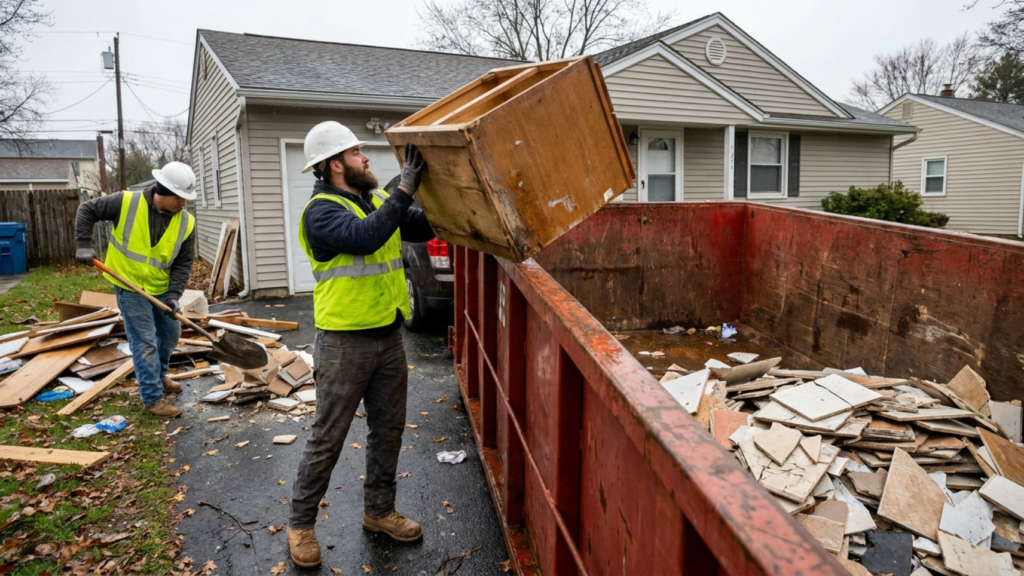
Efficient loading is an underappreciated part of the entire process. How you load the container affects how much fits, whether you exceed the weight limit, and whether the pickup goes smoothly.
Break Down Large Items
Before throwing in cabinet boxes or countertop slabs, break them down where possible. Flat-packing cabinets and stacking drywall sheets horizontally rather than tossing them in vertically nearly doubles usable container space.
Load Heavy Items First
Granite countertops, ceramic tile, and concrete backer board go in first, at the bottom of the container. Lighter materials — lumber, drywall, insulation — go on top. This distributes weight evenly and reduces the risk of exceeding axle weight limits during transport.
Do Not Overfill
Debris must not exceed the fill line marked on the side of the container. Overfilled loads are a safety and legal liability — drivers are required by law to reject them. Overfilling is also one of the most common (and avoidable) mistakes in any dumpster rental kitchen renovation guide.
Separate Materials for Recycling
California has strong material diversion requirements under its solid waste laws. Separating clean wood, cardboard, and metal from general debris before loading can reduce your disposal fees if your provider offers recycling credits. Ask BBP Dumpster about current recycling options when you contact them.
Step 7: Avoid the 7 Most Common Dumpster Rental Mistakes in Kitchen Renovations
Mistake 1 — Renting the Wrong Size
Always go one size up when estimating debris volume for a kitchen gut. An undersized container fills faster than expected, leaving your crew with nowhere to put materials mid-demo.
Mistake 2 — Forgetting to Check HOA or Permit Rules
Fines from the city or HOA for unauthorized container placement can easily outpace the rental cost itself.
Mistake 3 — Placing Hazardous Materials in the Dumpster
Paint, refrigerants, and asbestos-containing materials must be handled separately. Violations carry steep penalties and can delay your project.
Mistake 4 — Scheduling the Container Too Late
A container that arrives after demo day one means debris piling up inside the house. Schedule delivery the day before work begins.
Mistake 5 — Overfilling the Container
Debris over the fill line gets rejected at pickup. Fill to the line, not above it.
Mistake 6 — Ignoring Weight Limits
Dumpsters have tonnage limits, not just volume limits. Heavy materials like tile and concrete add up fast. Discuss weight expectations with your provider upfront.
Mistake 7 — Not Planning for a Second Load
For large gut renovations, a single container often is not enough. Plan and budget for a swap-out before starting demolition rather than scrambling mid-project.
Real Customer Experiences with BBP Dumpster
Homeowners across the Bay Area have trusted BBP Dumpster for exactly the kind of project this dumpster rental kitchen renovation guide covers. Here is what some of them have said:
“BBP Dumpster made our kitchen renovation so much easier. They dropped off exactly the size we needed, on time, and picked it up without any hassle. No hidden fees, no drama — just a clean, smooth rental experience.”
— Verified Google Review, Concord, CA
“I was nervous about permit requirements for street placement, but the team walked me through everything. They knew exactly what I needed for our city. Highly recommend for any renovation project.”
— Verified Google Review, Walnut Creek, CA
“We underestimated how much debris our kitchen demo would produce, and BBP Dumpster quickly arranged a swap-out so we could keep working. Responsive, professional, and local.”
— Verified Yelp Review via BBP Dumpster on Yelp
These experiences reflect what it means to follow a practical dumpster rental kitchen renovation guide with the support of a knowledgeable local provider. BBP Dumpster serves homeowners and contractors across Contra Costa County and Alameda County, including cities like Fremont, San Ramon, Lafayette, Hayward, Antioch, and Pleasanton.
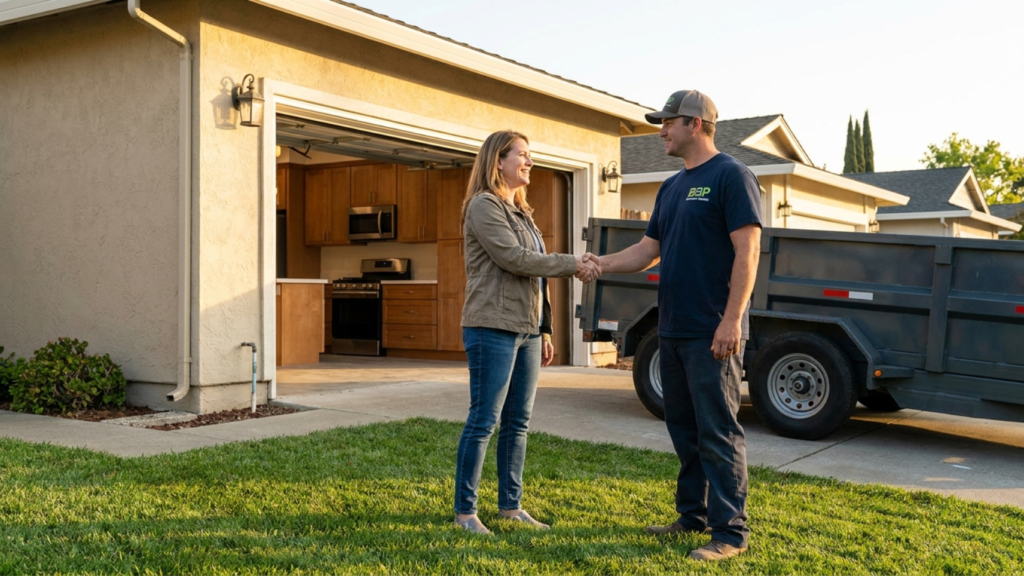
Local Case Study: Full Kitchen Gut in Concord, CA
A homeowner in Concord’s Clayton Road neighborhood recently completed a full kitchen renovation — removing original 1975 cabinetry, terrazzo flooring, laminate countertops, and outdated plumbing fixtures. The project team, working with BBP Dumpster, followed every step of this dumpster rental kitchen renovation guide from the start.
They scheduled a 20-yard container to arrive the day before demo began. A mid-project swap-out was arranged after day three, when the original cabinet removal revealed unexpected rotted subflooring that needed full replacement. Total debris volume ended up requiring two full container loads — something the project manager noted would have caused serious delays without a provider who could respond quickly.
The project was completed on schedule with zero permit violations and no debris left on the property between container swaps. The homeowner noted that having a clear dumpster rental kitchen renovation guide — and a local company who knew Bay Area regulations — made the entire process significantly less stressful.
BBP Dumpster is located at 4918 Clayton Rd, Concord, CA 94521, and can be reached at (925) 940-9906. You can also view their service map on Google Maps.
Seasonal Insight: When to Rent a Dumpster for Your Kitchen Renovation
Kitchen renovation activity peaks in spring and early summer — roughly March through June — when homeowners take on larger projects before the school year ends and before the holiday season approaches. A secondary peak occurs in September and October, as families rush to complete renovations before Thanksgiving.
If you are planning a spring or fall kitchen project, book your dumpster rental 2–3 weeks in advance to ensure container availability. Bay Area demand is particularly high in cities like Livermore, Brentwood, Richmond, and Martinez during these windows. Following a proactive dumpster rental kitchen renovation guide means scheduling early — not the week before demo day.
Frequently Asked Questions
How large of a dumpster do I need for a kitchen renovation?
For most kitchen renovations, a 20-yard dumpster is the most commonly recommended size. Minor cosmetic updates can be handled with a 10-yard container, while full gut renovations with structural changes often require a 30-yard unit. Using this dumpster rental kitchen renovation guide to assess your project scope first will help you arrive at the right size before placing your order.
Can I throw kitchen appliances in a dumpster?
Most non-working kitchen appliances — ranges, dishwashers, range hoods — can be placed in a general-purpose dumpster. However, refrigerators and air conditioning units contain refrigerants that must be removed by a certified technician before disposal. Always confirm appliance policies with your provider when following this dumpster rental kitchen renovation guide.
Do I need a permit to place a dumpster on my street?
In most Bay Area municipalities, yes. Street or curb placement requires a right-of-way permit from the city’s public works department. Driveway placement typically does not require a permit. Your dumpster rental provider should be able to advise you on local requirements as part of a complete dumpster rental kitchen renovation guide service.
How long can I keep the dumpster?
Standard rental periods range from 7 to 14 days, depending on the provider and project type. Extended rentals are available and should be arranged in advance. For phased renovations, a container swap-out is usually the most efficient option. Learn more about rental terms and service options at BBP Dumpster’s website.
What happens if I overfill the dumpster?
An overfilled container — debris above the fill line — will be rejected at pickup and will require you to remove the excess before the driver can haul it away. Overage fees also apply in many cases. Preventing overfills is one of the most important practical points in any dumpster rental kitchen renovation guide, and it begins with accurate sizing at the time of rental.
Conclusion: Start Your Kitchen Renovation the Right Way
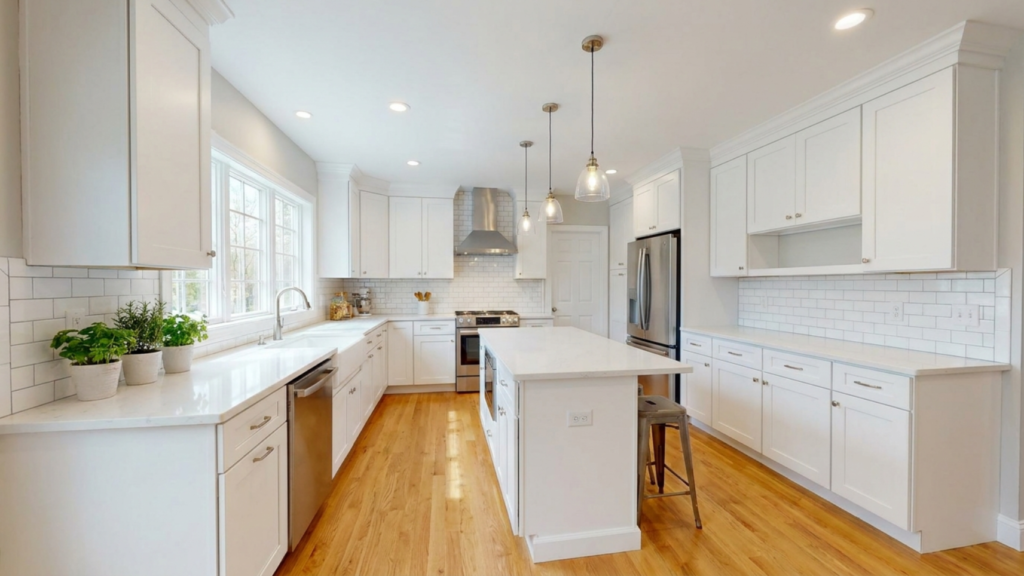
A kitchen renovation is one of the highest-value projects a homeowner can undertake — and one of the most logistically demanding. Following a complete dumpster rental kitchen renovation guide from the very beginning of your project is what separates smooth, on-schedule renovations from chaotic, over-budget ones. From choosing the right dumpster size and scheduling delivery at the right time, to understanding prohibited materials and avoiding common loading mistakes, every decision in this guide protects your timeline, your budget, and your property.
The steps outlined here are not just theoretical — they reflect what experienced Bay Area homeowners and contractors do on real jobs every day. And having the right local partner makes every step easier.
BBP Dumpster has served the Concord area and greater Bay Area with reliable, professional dumpster rental services built specifically for projects like yours. Whether you are in Danville, Orinda, San Leandro, Union City, Hercules, or anywhere across the service area, the team is ready to support your project from day one.
Ready to start your kitchen renovation with a reliable waste management plan? Contact BBP Dumpster today and get your dumpster scheduled — before demo day arrives.
BBP Dumpster
4918 Clayton Rd, Concord, CA 94521
Phone: (925) 940-9906
Email: bbpdumpster@gmail.com
Office Hours: Monday–Friday, 9 AM–5 PM | Saturday, 9 AM–2 PM