Cooler mornings and shorter days mean one thing for most homeowners in Concord and the greater Bay Area: it’s time to get the house ready for winter. A solid fall home cleanout checklist dumpster plan turns a weekend of dread into a straightforward, room-by-room project. In this guide, you’ll learn exactly what to toss, what to keep, and how to haul it all away efficiently before the first storm hits. Keep reading to build a fall home cleanout checklist dumpster strategy that actually works for your home.
What Is a Fall Home Cleanout, and Why Does It Matter Before Winter?
A fall home cleanout is the seasonal process of clearing out clutter, yard debris, and unused items before cold weather sets in. Unlike a quick tidy-up, it’s a deeper reset: garages get emptied, gutters get cleared, and closets full of summer gear finally get sorted. Homeowners across Contra Costa County and the wider Bay Area treat this as an annual ritual, much like spring cleaning, but with a very different purpose, preparing the property to handle rain, wind, and reduced daylight.
Skipping this step has real consequences. Wet leaves clog drainage, forgotten patio furniture becomes a tripping hazard in the dark, and cluttered garages make it harder to store snow gear, holiday decorations, or firewood. A well-organized fall home cleanout checklist dumpster approach solves all of this at once, giving you a single, structured pass through the house instead of a dozen scattered chores.
Building Your Fall Home Cleanout Checklist Dumpster Plan
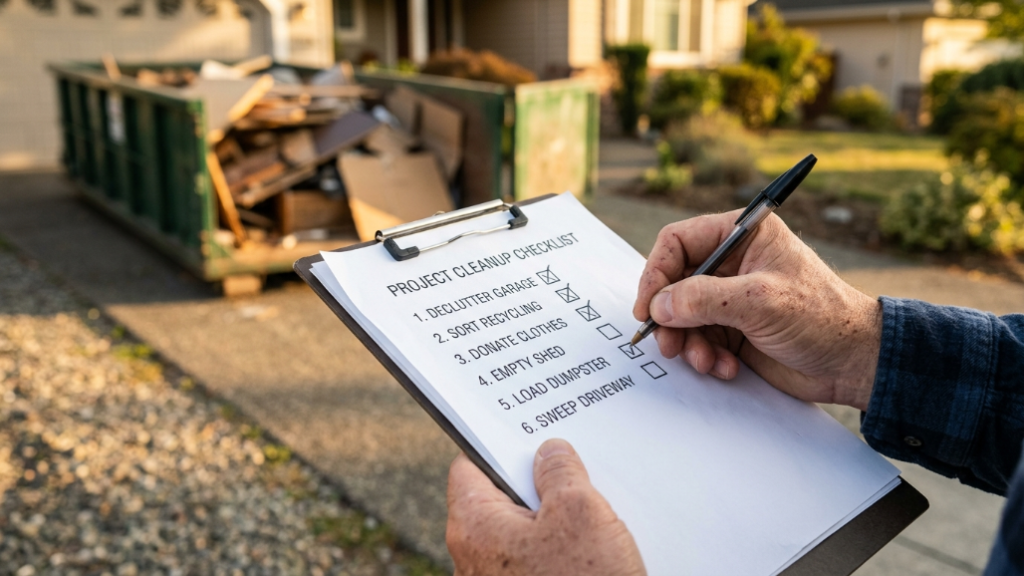
Every effective fall home cleanout checklist dumpster plan starts with a walkthrough. Move room by room, and resist the urge to jump straight to the garage, starting small builds momentum for the bigger spaces later.
Step 1: Walk the Property and Make Three Piles
Before anything leaves the house, sort items into three simple categories: keep, donate, and dispose. This single habit prevents the most common cleanout mistake, hauling everything to the curb without a second look, only to realize later that a usable item was thrown away.
- Keep: Items you use seasonally, like holiday decorations or winter coats.
- Donate: Furniture, clothing, and toys in good condition that no longer fit your household.
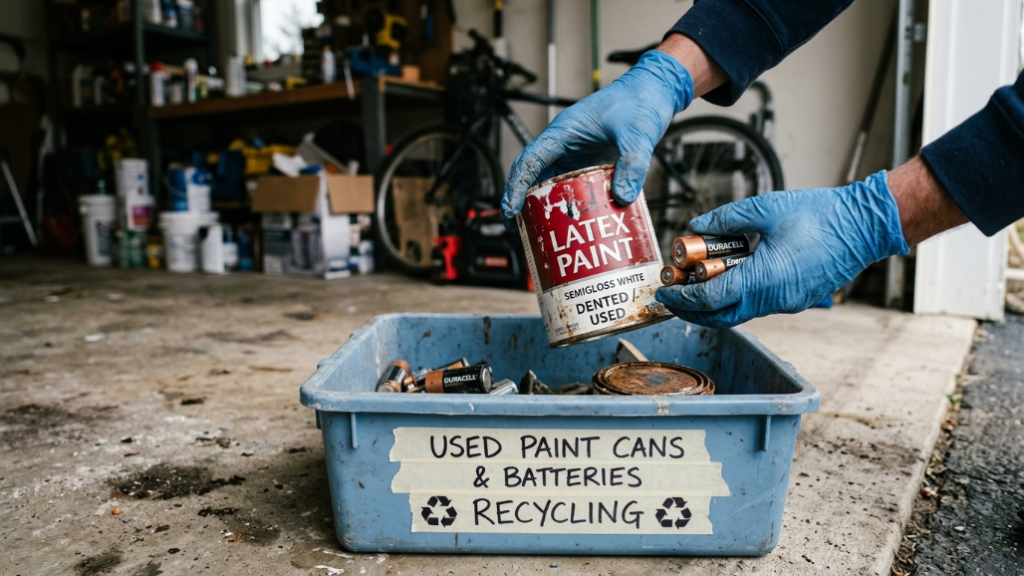
- Dispose: Broken appliances, damaged furniture, expired paint, and yard waste that can’t be composted.
Step 2: Tackle the High-Clutter Zones First
Garages, attics, and basements accumulate the most volume, so they deserve the bulk of your fall home cleanout checklist dumpster effort. Look for:
- Old paint cans and hardware left over from past projects
- Broken patio furniture and rusted grills
- Cardboard boxes softened by summer humidity
- Unused sports equipment and camping gear
- Excess yard waste, branches, and fallen leaves
Step 3: Handle Hazardous and Bulky Items Separately
Not everything belongs in a general debris pile, and this is the step most fall home cleanout checklist dumpster plans skip. Items like propane tanks, old batteries, motor oil, and certain electronics need separate handling through your local household hazardous waste program rather than a standard roll-off container. Mattresses, large appliances, and construction debris from a fall home improvement project also typically require specific placement instructions, so it’s worth confirming what’s accepted before loading day.
How to Haul It: Choosing the Right Container for Your Cleanout
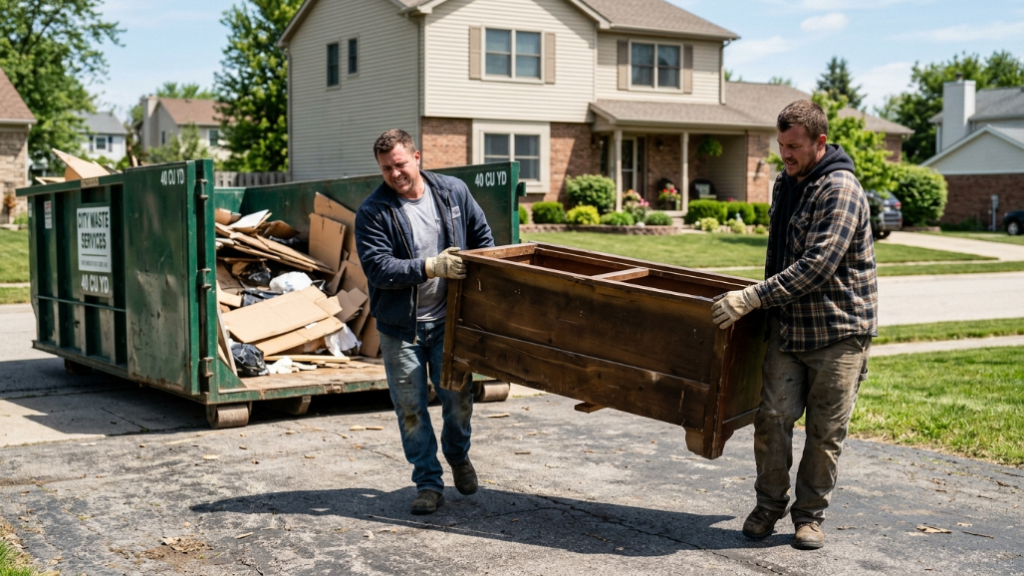
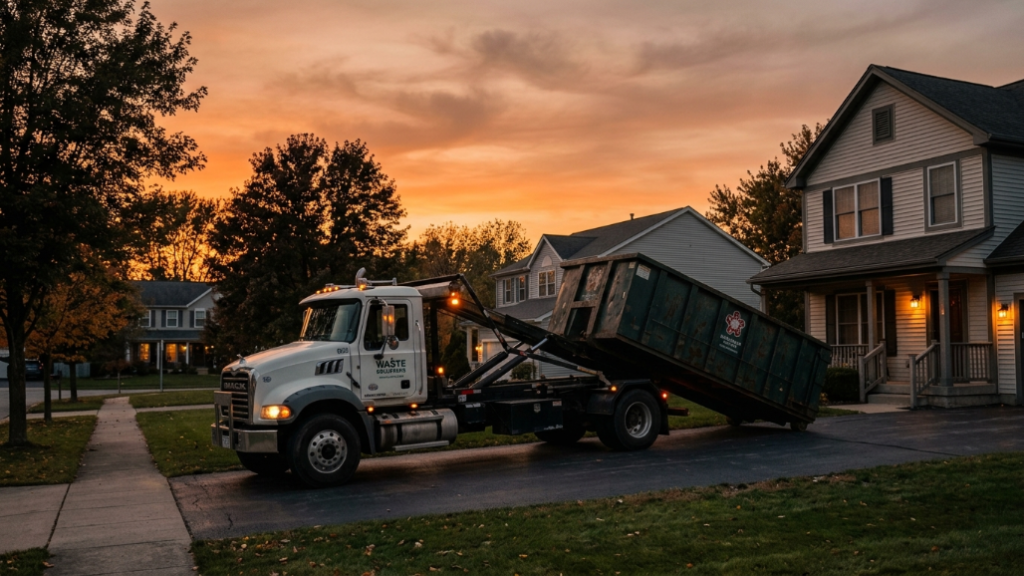
Once the sorting is done, hauling becomes the next challenge in any fall home cleanout checklist dumpster project. For most single-family homes, a roll-off container delivered directly to the driveway is the most efficient way to manage a fall home cleanout checklist dumpster project, especially when the job spans a full weekend. Instead of making repeated trips to a transfer station, everything goes in one place, and pickup happens once the container is full.
When choosing a container size, think about scope rather than square footage. A single-room decluttering project needs far less space than a whole-house reset that includes yard debris, old furniture, and garage overflow. Placement matters too, a flat, accessible spot near the driveway or curb, away from low tree branches and overhead wires, makes loading heavy items like couches or wet leaves far easier on your back.
Homeowners throughout Concord, Walnut Creek, and Clayton often find that scheduling delivery early in the project, rather than after everything is already piled on the lawn, keeps the whole fall home cleanout checklist dumpster timeline moving smoothly from start to finish.
Practical Tips for a Smooth Fall Home Cleanout
A few small habits make a measurable difference once a fall home cleanout checklist dumpster project actually begins:
- Start with the areas you use least. Storage sheds and attics rarely get touched, which makes them the easiest place to find quick wins.
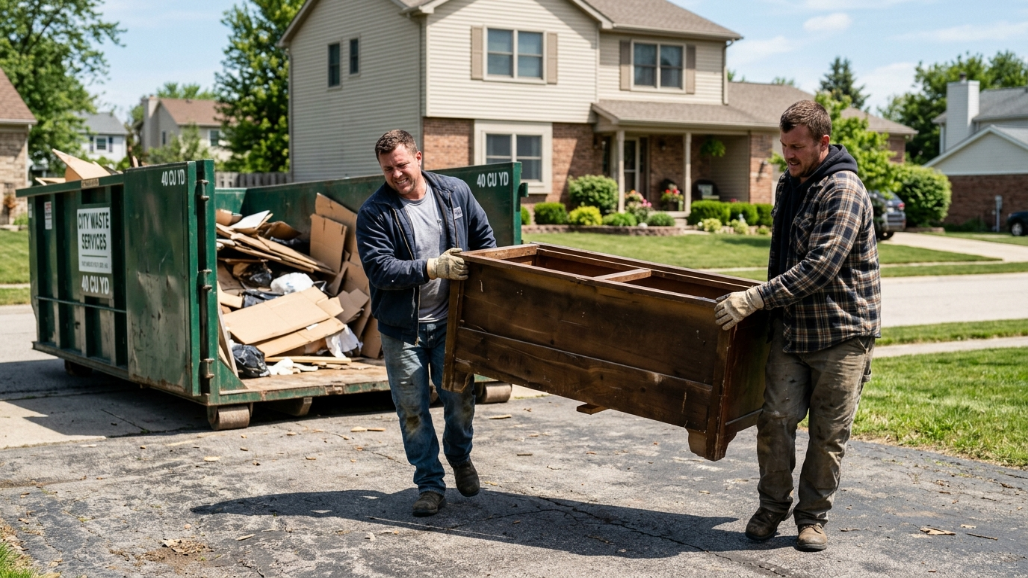
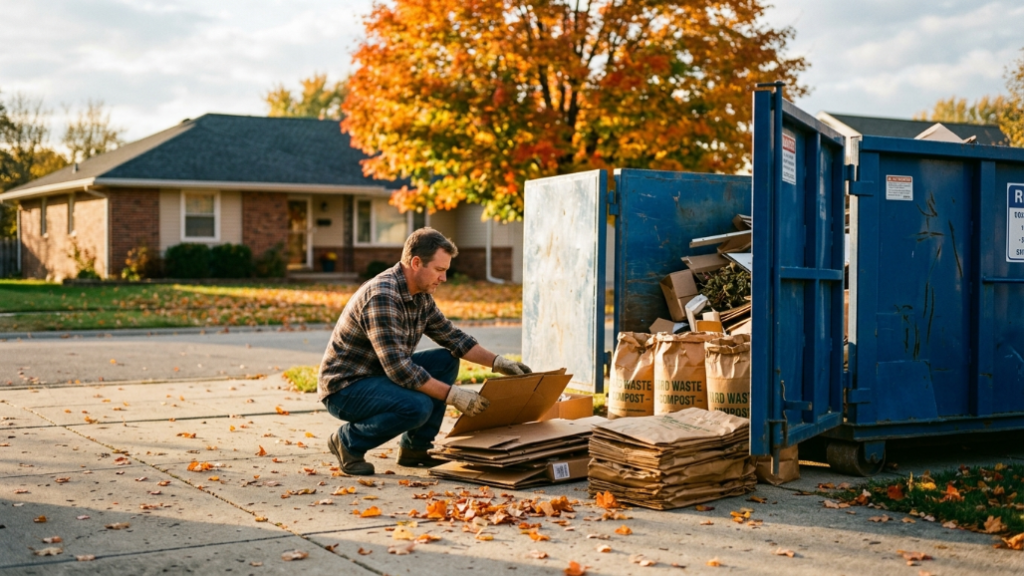
- Break down boxes and furniture before loading. Flattened cardboard and disassembled furniture free up significantly more room in a container.
- Load heavy items first, light items last. This keeps weight distributed evenly and protects lighter bags or boxes from being crushed.
- Set a firm deadline. A weekend cleanout with a hard end time tends to get finished; an open-ended one often stalls.
- Recruit help for the heavy lifting. A second set of hands makes moving furniture, appliances, and yard debris considerably safer.
Following these steps as part of a broader fall home cleanout checklist dumpster routine helps homeowners avoid the burnout that comes with tackling an entire house alone.
Common Mistakes to Avoid During a Fall Home Cleanout
Even well-intentioned homeowners run into the same handful of setbacks. Avoiding these keeps your fall home cleanout checklist dumpster project on schedule:
- Underestimating volume. Garages and attics almost always hold more than expected, leaving people short on space midway through.
- Mixing hazardous materials with general debris. This can create disposal complications and, in some areas, violate local regulations.
- Waiting until the last weekend before winter. Container availability tightens as the season progresses, so building a fall home cleanout checklist dumpster timeline early pays off.
- Ignoring permit requirements. Placing a container on a public street in Concord or nearby cities may require a permit; placing it on your own driveway typically does not.
- Skipping the “keep, donate, dispose” sort. Without it, usable furniture and clothing often end up discarded instead of donated.
Homeowners who plan their fall home cleanout checklist dumpster schedule around these common pitfalls consistently finish faster and with less stress.
A Local Example: One Concord Household’s Fall Reset
Consider a composite example of a fall home cleanout checklist dumpster project, based on patterns we see across the Bay Area each fall. A family in Walnut Creek set aside a single weekend to clear out a garage that had absorbed years of overflow, old paint, broken patio chairs, a retired bicycle, and boxes from a move that never got unpacked. By sorting first and scheduling a driveway container before starting, they moved through the entire garage in one day, followed by the attic on day two.
The result was a fall home cleanout checklist dumpster process that felt manageable instead of overwhelming, clear piles for donation, a single load of hazardous items dropped at a local collection site, and a driveway that, by Sunday evening, was clear enough to park in again. Neighbors in similar homes across Contra Costa County report the same outcome: breaking the project into sorted stages, rather than one chaotic push, is what makes the difference.
Frequently Asked Questions
How long should a fall home cleanout take?
Most single-family homes can complete a fall home cleanout checklist dumpster project over one focused weekend, though larger properties with full garages or attics may need two.
What shouldn’t go in a general debris container?
Paint, batteries, motor oil, propane tanks, and certain electronics usually require separate disposal through a household hazardous waste program rather than general debris.
Do I need a permit for a driveway container?
In most cases, placing a container on your own private driveway does not require a permit. Placing one on a public street often does, so it’s worth checking with your city beforehand.
What’s the best way to start a fall home cleanout checklist dumpster project?
Begin with a full walkthrough, sort everything into keep, donate, and dispose piles, then schedule delivery of your container before you start pulling items out of storage.
Can donated items be picked up separately?
Yes. Many local charities and donation centers will schedule a separate pickup for furniture and larger items, which keeps them out of the general debris pile entirely. Calling ahead is worth the extra step, since most donation centers have specific guidelines about condition, size, and what they’re currently able to accept, a couch with visible damage, for example, is rarely eligible even if everything else about it is usable. Scheduling that pickup before delivery day also means fewer items sitting in the driveway waiting for a decision, which keeps the rest of the project moving.
Bringing Your Fall Home Cleanout Together
A fall home cleanout doesn’t have to mean a chaotic weekend of hauling boxes back and forth. With a clear plan, sort first, tackle high-clutter zones early, separate hazardous items, and schedule your container ahead of time, the entire process becomes far more manageable. Following a fall home cleanout checklist dumpster approach gives every room a clear next step instead of leaving decisions for the last minute.
BBP Dumpster, a family-owned, locally operated company based at 4918 Clayton Rd, Concord, CA 94521, works with homeowners throughout Concord, Walnut Creek, Clayton, and the wider Contra Costa County area on exactly this kind of seasonal project. Customers frequently mention prompt delivery, clear communication about placement and timing, and pickups that happen exactly when scheduled, the kind of dependable service that makes a fall home cleanout checklist dumpster plan easy to stick to. The team can be reached Monday through Friday, 8:00 AM to 5:00 PM, by phone at (925) 940-9906 or by email at bbpdumpster@gmail.com.
For homeowners in Contra Costa County planning a seasonal reset, exploring dumpster rental options in Concord is a practical first step. Those in neighboring communities can find local details for Walnut Creek, Clayton, and Danville, or browse the full areas served page. To learn more about the company’s background, visit the about page, and for hazardous-material guidance and donation drop-off standards, organizations like Earth911 and the Habitat for Humanity ReStore network offer additional guidance that complements a well-planned cleanout.
Ready to start your fall home cleanout checklist dumpster project this season? Contact BBP Dumpster to schedule delivery before the weather turns.